Hot Yoga in Tallinn
Searching for hot yoga? Discover how traditional Ashtanga and Vinyasa practices generate powerful natural heat from within, no artificial heating needed.

 English
 Eesti
Eesti
 Suomi
Suomi
 Русский
Searching for hot yoga? Discover how traditional Ashtanga and Vinyasa practices generate powerful natural heat from within, no artificial heating needed.
If you have been searching for hot yoga in Tallinn, you have probably noticed that the city does not have a dedicated Bikram or heated yoga studio. That is where GoYoga offers something different. At our studio on Narva mnt 7D, 3rd floor, Kesklinn, we practise yoga the traditional way, and our most dynamic classes generate a level of internal heat that may genuinely surprise you.
Hot yoga, popularised by Bikram Choudhury in the 1970s, involves practising a fixed sequence of postures in a room heated to 35 to 42 degrees Celsius. It has attracted a loyal following worldwide for its intense physical experience and the feeling of deep cleansing through sweat. We respect that tradition and the practitioners who love it. However, the yoga traditions we teach at GoYoga take a fundamentally different approach to heat, one that is deeply rooted in classical yogic philosophy.
In the Ashtanga and Vinyasa traditions, heat is not something you add to the room. It is something you build within your own body through disciplined practice. The Sanskrit term for this is tapas, often translated as "heat" or "fiery discipline." It is considered one of the most important elements of yoga practice, a purifying fire that arises from the combination of movement, breath, and focused intention.
New to GoYoga?
Try 3 classes for just 29 EUR
The Studio Explorer Pass gives you 3 classes of your choice over 30 days. Experience our heat-building Ashtanga and Vinyasa classes and feel the difference.
Get Explorer Pass →How Ashtanga and Vinyasa generate internal warmth through movement and breath.
When you practise Ashtanga yoga, three elements work together to raise your core body temperature naturally. First, ujjayi pranayama, a controlled breathing technique where you gently constrict the back of the throat, creates a warming effect that heats the air as it enters your lungs. Research published in the International Journal of Yoga has shown that yogic breathing techniques can measurably increase metabolic rate and body temperature.
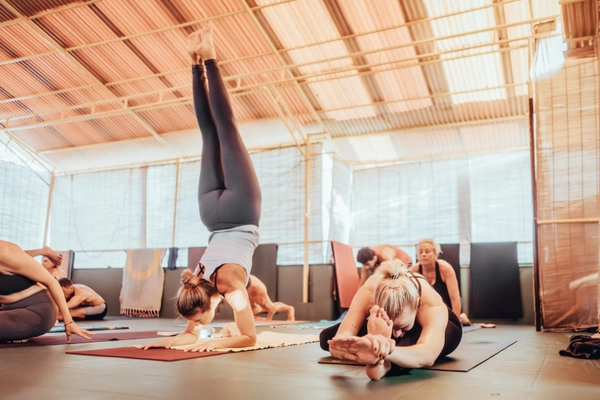
Second, the vinyasa system, linking each posture to the next through flowing transitions of movement and breath, creates a continuous physical effort similar to a cardiovascular workout. Your muscles generate heat as they contract and release through sun salutations, standing sequences, and seated postures.
Third, bandhas, internal energy locks engaged during practice, create a container that holds and circulates the heat you generate. The combination of these three elements means that by the middle of an Ashtanga practice, most students are sweating profusely, from the inside out.
Vinyasa Flow works on similar principles. The continuous, rhythmic movement between postures keeps your heart rate elevated and your muscles warm throughout the entire class. Creative sequencing by our teachers ensures you build heat progressively, reaching a peak intensity that many students compare favourably to heated yoga classes.
Understanding the differences between heated studios and traditional heat-building practices.
Why many experienced yogis choose natural heat-building practices.
Our most dynamic practices that deliver the intensity you are looking for.
Our signature morning practice and the closest experience to hot yoga you will find without artificial heat. The Ashtanga Primary Series is a demanding, athletic sequence of postures linked by vinyasa transitions and powered by ujjayi breathing. By the time you reach the standing sequence, you will feel the heat building. By the seated postures, you will be sweating. Led by founder Raili Maripuu, a practitioner with decades of experience and recognition from the late Lino Miele, our Mysore programme gives you individual guidance and adjustments within a self-paced format that suits beginners and advanced practitioners alike.
Mon-Fri 6:30-9:00 AM | Teachers: Raili Maripuu, Keiu Allas (Grossberg)
Dynamic, creative, and powerfully warming. Our Vinyasa Flow classes build heat through continuous movement, linking postures in flowing sequences that challenge your cardiovascular endurance, balance, and strength. Each class is different, with our teacher Edith Tiitsaar crafting sequences that progressively build intensity. Power-style sequences and arm balances feature regularly for those seeking maximum challenge.
Evening and weekend classes | Teacher: Edith Tiitsaar
Our practice space contributes to a comfortably warm practice environment.
While we do not artificially heat our studio, our practice space at Narva mnt 7D is naturally warm and welcoming. Situated on the 3rd floor of a well-insulated building, heat rises naturally to our level. The 100 square metre oak floor retains warmth beautifully, and during group classes, the collective body heat of practitioners brings the room to a comfortable working temperature within minutes.
The result is a practice environment that is warm without being oppressive, where you can breathe freely and focus entirely on your practice. As noted by the Yoga Journal, the ideal practice temperature allows the body to warm itself through effort, and that is exactly the environment we provide.
Premium equipment is provided free of charge, including Liforme and B Yoga mats, blocks, straps, blankets, and meditation cushions. Changing rooms with showers are available so you can freshen up after your practice.
Flexible options with no long-term contracts. Start with an Explorer Pass.
Best for New Students
29 EUR
3 classes / 30 days
Studio Explorer Pass
Single Class
18 EUR
Any style, any time
"Visiting Tallinn from abroad, happy to have found this shala. Raili was incredibly welcoming and I gained much from her instruction and adjustments."
- Kam Wattanodom, Google Review ★★★★★
Everything you need to know about hot yoga and natural heat practices in Tallinn.
Tallinn does not currently have a dedicated hot yoga or Bikram yoga studio. However, GoYoga Studio offers Ashtanga Mysore and Vinyasa Flow classes that generate significant internal heat through dynamic movement and ujjayi breathing. Many practitioners find these styles deliver the same satisfying warmth and detoxification without artificial heating. Our studio at Narva mnt 7D is naturally warm, especially during group classes.
Hot yoga is practised in a room heated to 35-42 degrees Celsius. Ashtanga yoga generates heat internally through a specific sequence of postures, ujjayi breathing (a controlled breathing technique that raises core temperature), and bandhas (internal energy locks). In Ashtanga, the heat comes from within your body rather than an external source. Traditional yogic philosophy calls this tapas, the purifying fire of disciplined practice. Both approaches produce sweat and physical intensity, but the source of the heat is fundamentally different.
No. External heat is not required for an effective, challenging yoga practice. Ashtanga and Vinyasa Flow generate substantial internal heat through continuous movement and controlled breathing. Without artificial heat, your body regulates its own temperature, reducing the risk of overheating, dehydration, and overstretching. Many experienced practitioners prefer natural-heat yoga for building genuine strength and sustainable flexibility.
Absolutely. Ashtanga Mysore and Vinyasa Flow at GoYoga are dynamic, physically demanding practices. Most students are sweating within 15 to 20 minutes. The studio is on the 3rd floor with excellent insulation and 100 square metres of oak flooring, which naturally retains warmth. During group classes, the room temperature rises organically from the collective body heat of practitioners.
Ashtanga Mysore (Monday to Friday, 6:30-9:00 AM) is the closest equivalent in terms of heat and intensity. The fixed sequence of postures, combined with ujjayi breathing, builds tremendous internal heat. Vinyasa Flow is another excellent option, offering dynamic, continuous movement that raises your heart rate and generates heat naturally. Both styles will leave you feeling the warmth and detoxification that hot yoga seekers are looking for. Visit our offers page for the Explorer Pass to try them.
The best way to understand natural heat yoga is to step onto the mat and feel it. We would love to welcome you to GoYoga.
Questions? Email [email protected] or call +372 513 2433